
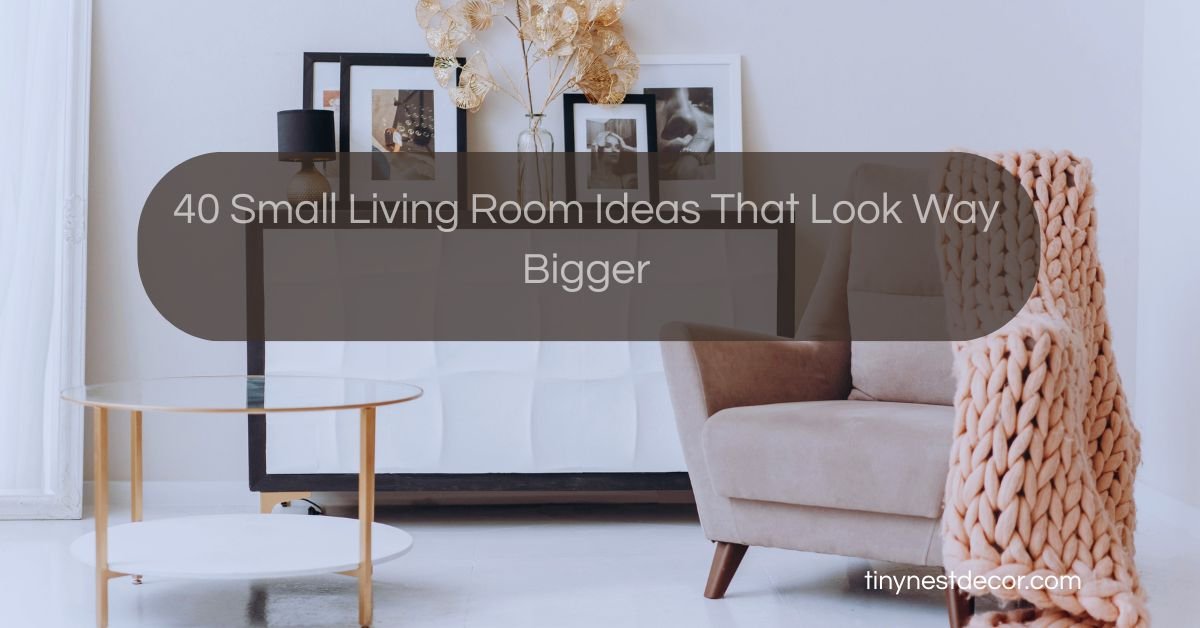
Your small living room can feel twice its size once you stop fighting the square footage and start working with it.
I’ve pulled together 40 small living room ideas that make cramped spaces look open, airy, and honestly a little fancy.
These work whether you’re in a rental, a studio, or a shoebox apartment where the couch practically touches the TV.
Every idea here is renter-friendly or easy to try this weekend, and most cost less than a nice dinner out.
Grab a coffee and let’s find your favorite.
1. Float Your Furniture Off the Walls

Pushing everything flat against the walls feels like it saves space, but it usually makes a room read flat and boxy.
Pull your sofa out even 6 inches and slide a skinny console table behind it.
That tiny gap tricks the eye into thinking there’s room to spare.
It also gives you a spot to drop keys and a lamp without stealing floor space.
2. Choose a Sofa With Exposed Legs
Furniture that sits flush on the floor blocks your sightline and makes the room feel heavy.
A sofa raised on thin legs lets light and floor show underneath, which reads as more open space.
West Elm and Article both do slim-leg sofas in the $900 to $1,400 range that fit tight rooms.
Honestly, this is the one change I’d make first in my own place.
Pro Tip: Measure the gap under the sofa before you buy.
A clearance of at least 6 inches is what actually creates that floating look, anything less and you lose the effect.
3. Go With a Light, Neutral Wall Color

Pale walls bounce light around and push the edges of a room outward.
Think warm whites, soft greiges, and pale putty tones instead of stark bright white, which can feel cold.
Benjamin Moore’s Classic Gray and Sherwin-Williams Agreeable Gray are two renter favorites that read light without feeling clinical.
If you’re after cozy small living room ideas, a warm neutral base does most of the work.
4. Hang Curtains High and Wide
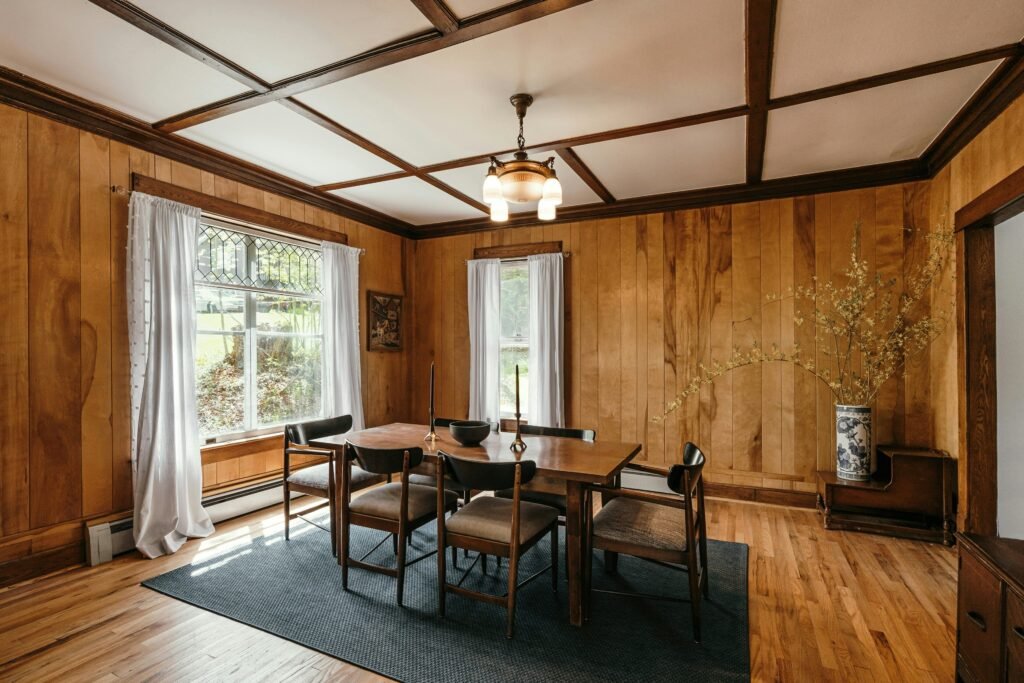
Where you hang your curtain rod changes everything.
Mount it a few inches below the ceiling and let the panels stretch past the window edges on both sides.
This makes your windows look bigger and your ceilings taller.
Go with light linen or cotton in a color close to your wall so the whole wall reads as one tall, uninterrupted surface.
5. Add a Big Mirror Across From a Window
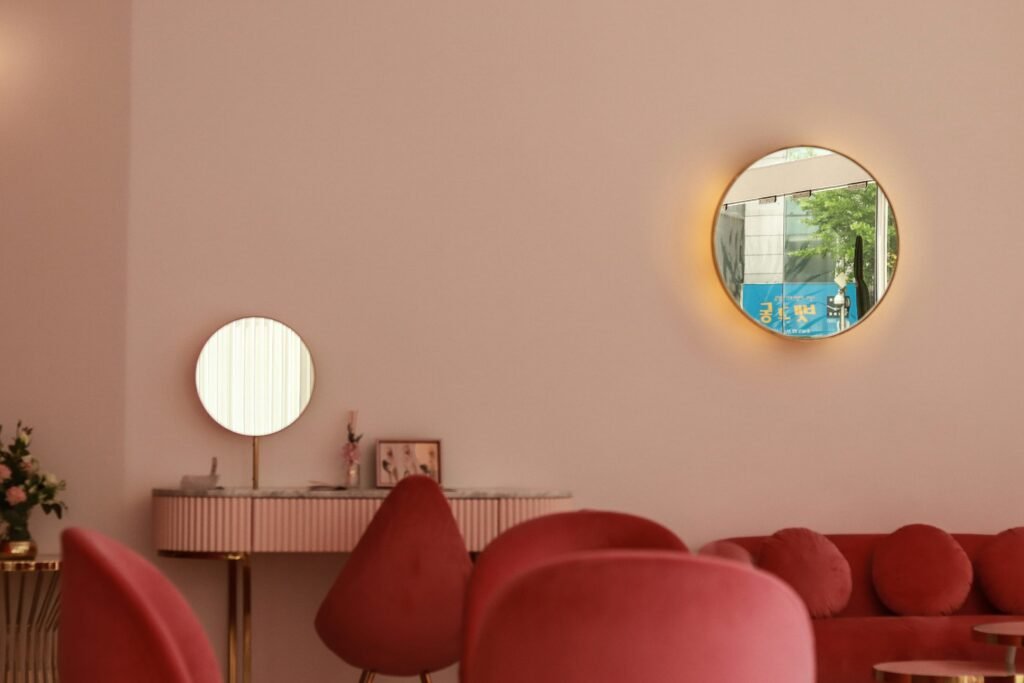
A mirror placed opposite a window basically doubles your natural light and gives the illusion of a second window.
It’s the oldest small-space trick in the book because it genuinely works. A large leaning floor mirror also stretches the room vertically.
Target and Wayfair carry oversized arched mirrors starting around $80 that look far more expensive than they are.
6. Pick a Glass or Acrylic Coffee Table
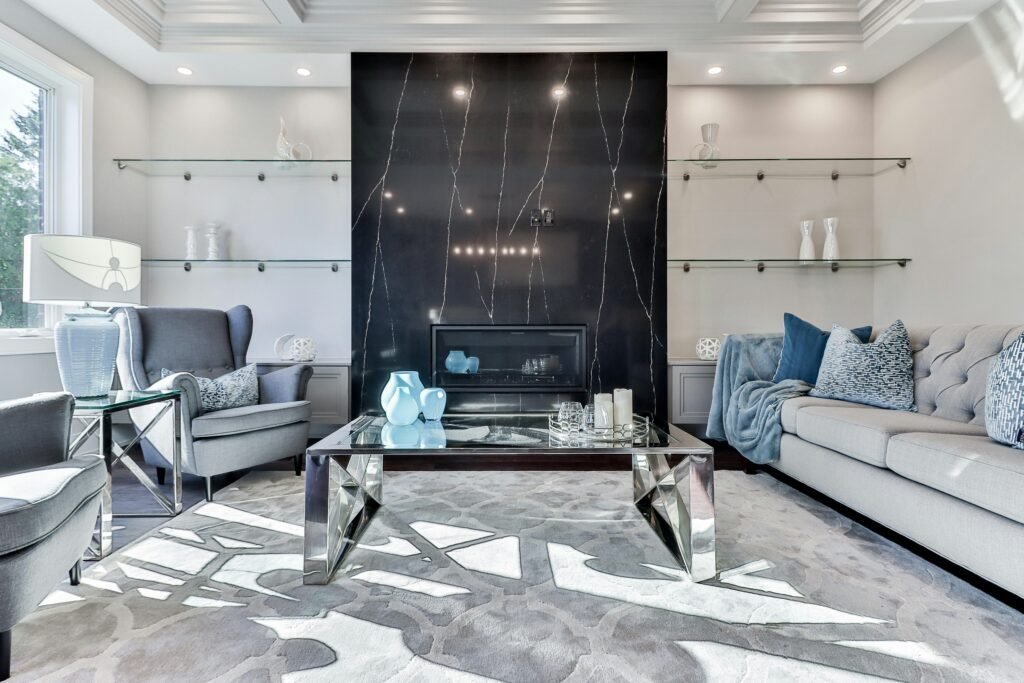
A solid wood or stone coffee table blocks your view and eats visual space.
A glass or clear acrylic one lets your eye travel straight through, so the floor looks bigger.
CB2 and Amazon both stock lucite coffee tables in the $150 to $300 range.
It’s a small swap that makes a surprising difference in a tight sitting area.
7. Use One Large Rug, Not a Small One
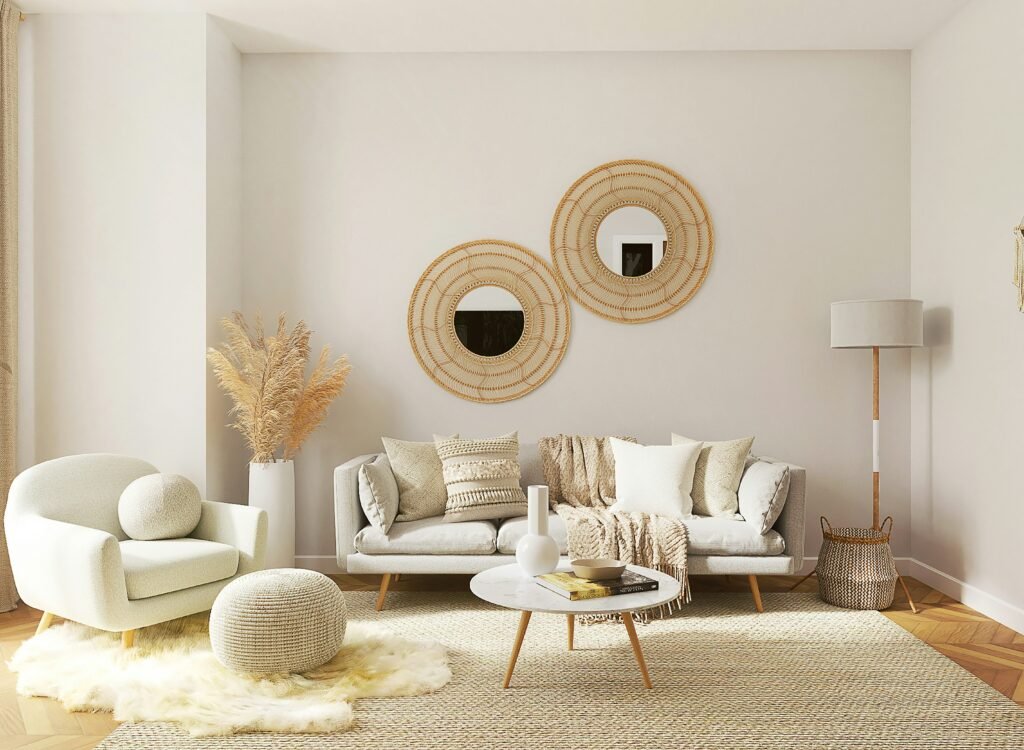
A rug that’s too small chops the floor into pieces and shrinks the whole room.
Go bigger than feels right, big enough that at least the front legs of every piece sit on it.
This pulls the seating together into one grounded zone and makes the space feel intentional.
For small apartment living room ideas, one generous rug beats three tiny scattered ones every time.
Pro Tip: For a 10×12 room, an 8×10 rug is usually the sweet spot. People buy 5×7 rugs way too often and wonder why the room feels off.
8. Mount the TV on the Wall
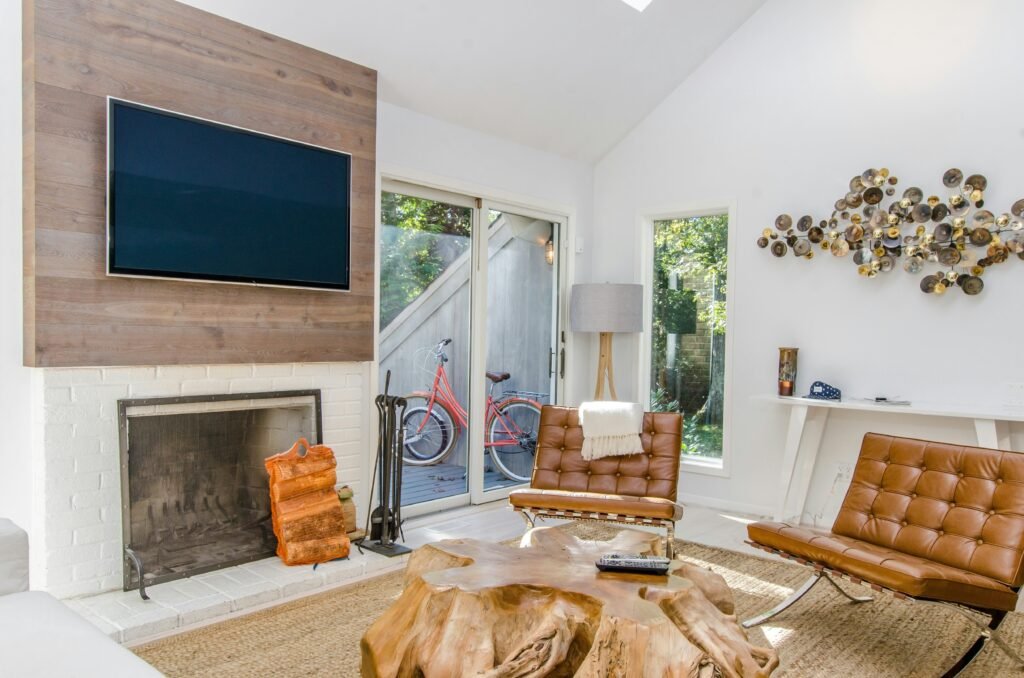
A TV stand takes up precious floor real estate and adds bulk.
Mounting the TV frees up that footprint entirely and keeps sightlines clean. Add a slim floating shelf underneath for your streaming box and remotes.
If you rent, use a mount rated for your wall type and patch the holes later, it’s a small trade for the space you reclaim.
9. Try Vertical Storage That Climbs the Wall
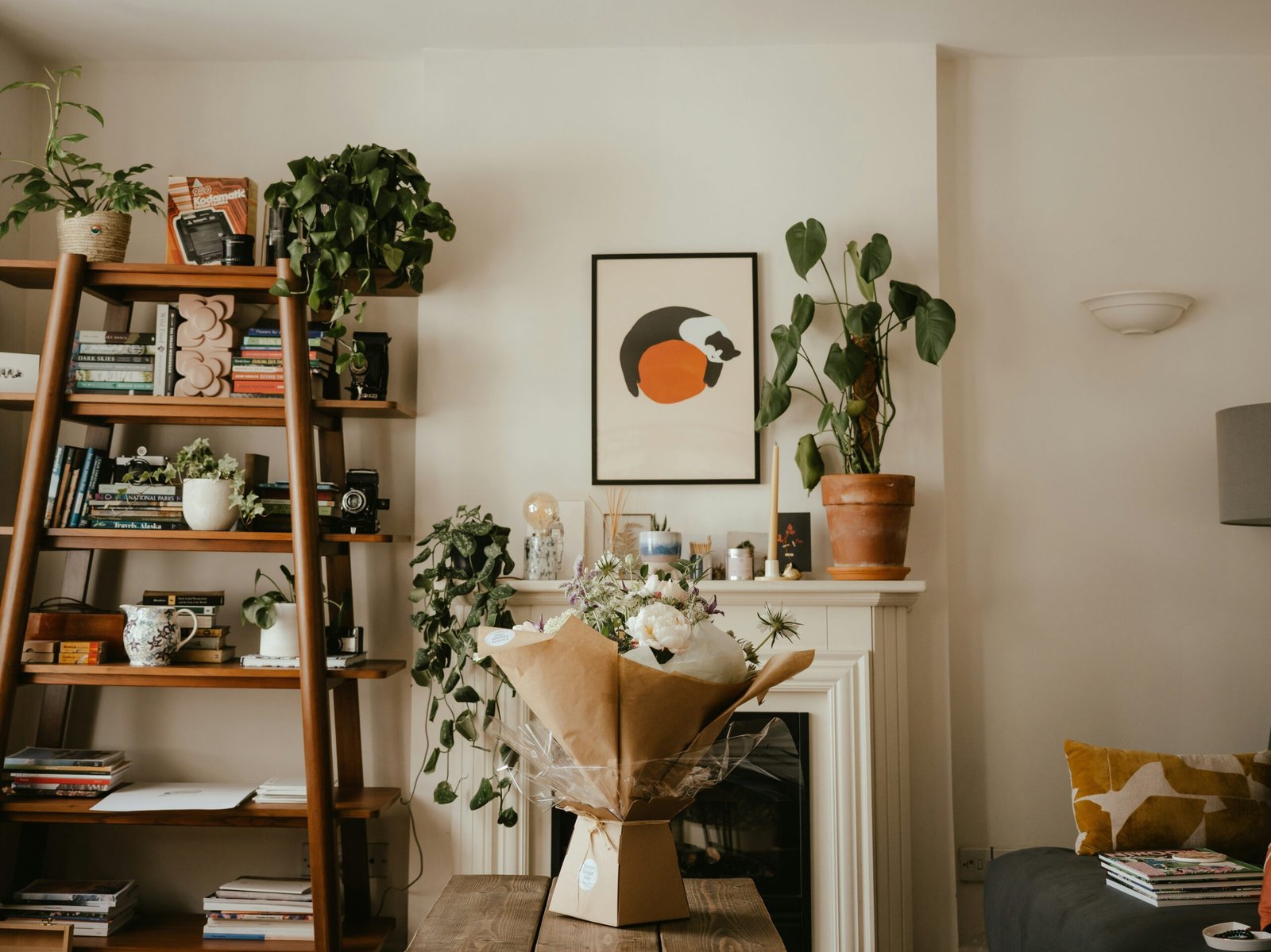
When you can’t build out, build up.
Tall, narrow shelving uses the wall height most people ignore and draws the eye upward, which makes ceilings feel higher.
The IKEA BILLY bookcase is a renter classic at around $70 and comes in narrow widths perfect for tight walls.
Fill the top shelves with light items so it doesn’t feel top-heavy.
10. Pick Furniture That Does Two Jobs
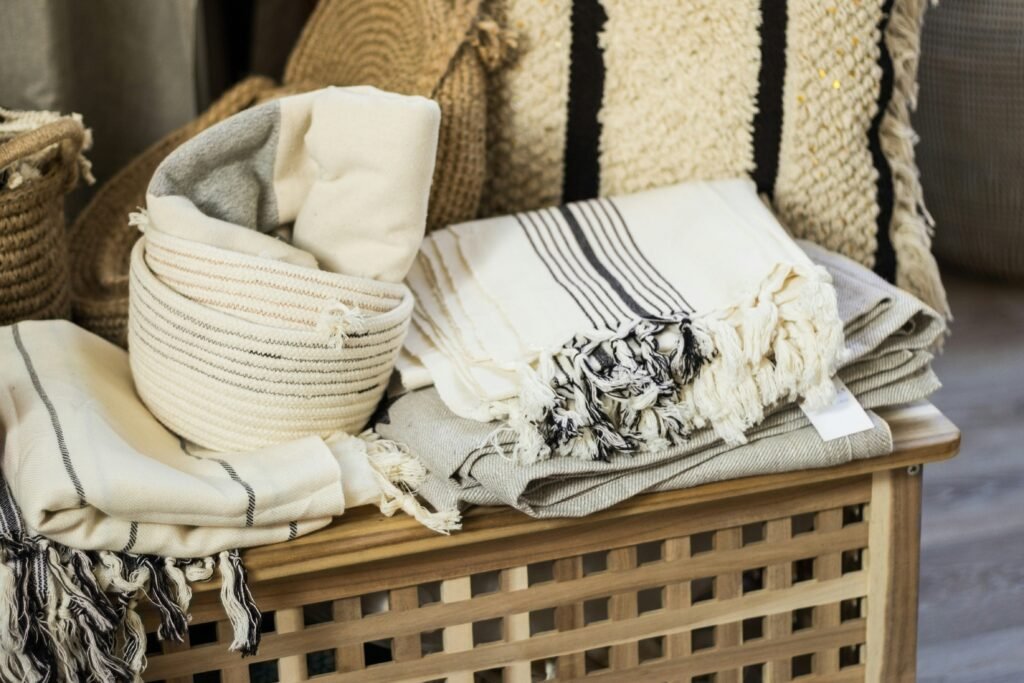
In a small room, every piece should earn its keep.
A storage ottoman works as a coffee table, extra seating, and a hiding spot for blankets all at once.
A lift-top coffee table gives you a workspace and concealed storage.
These multitaskers keep clutter out of sight, which instantly makes any room feel bigger.
11. Keep the Coffee Table Clear
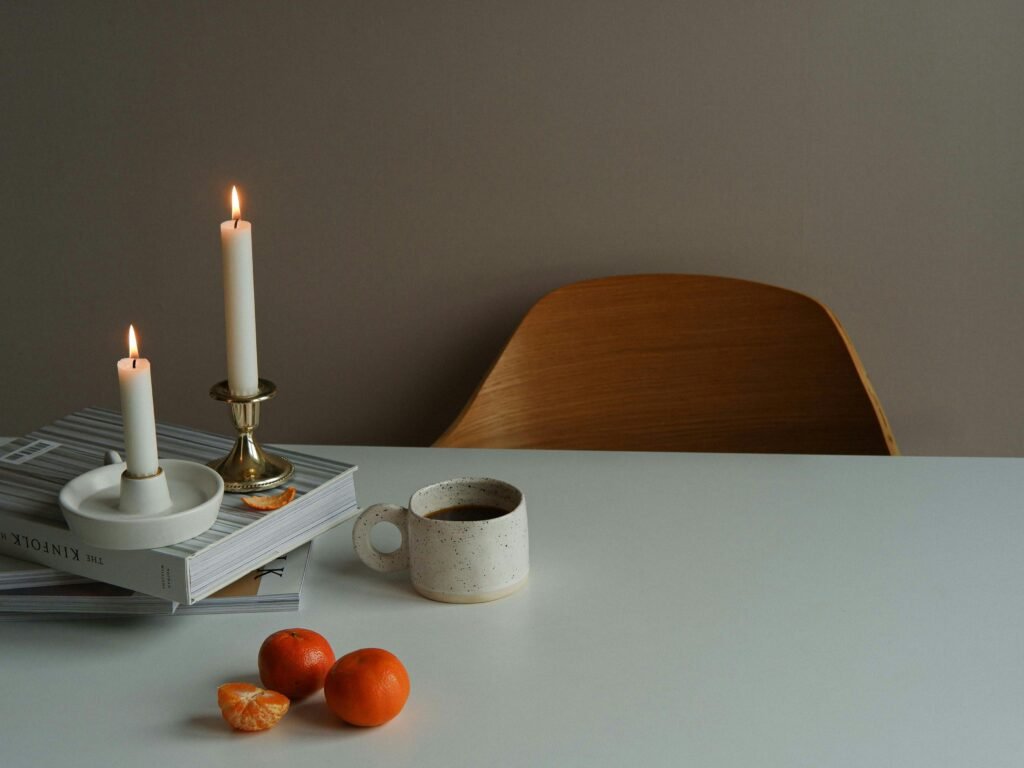
A cluttered surface makes the whole room feel chaotic and cramped.
Style your coffee table with the rule of three: one stack of books, one small object, one bit of greenery.
That’s it. The empty space around those few items is what makes the room feel calm and open. Less really is more here.
12. Choose a Sectional Sized for the Room
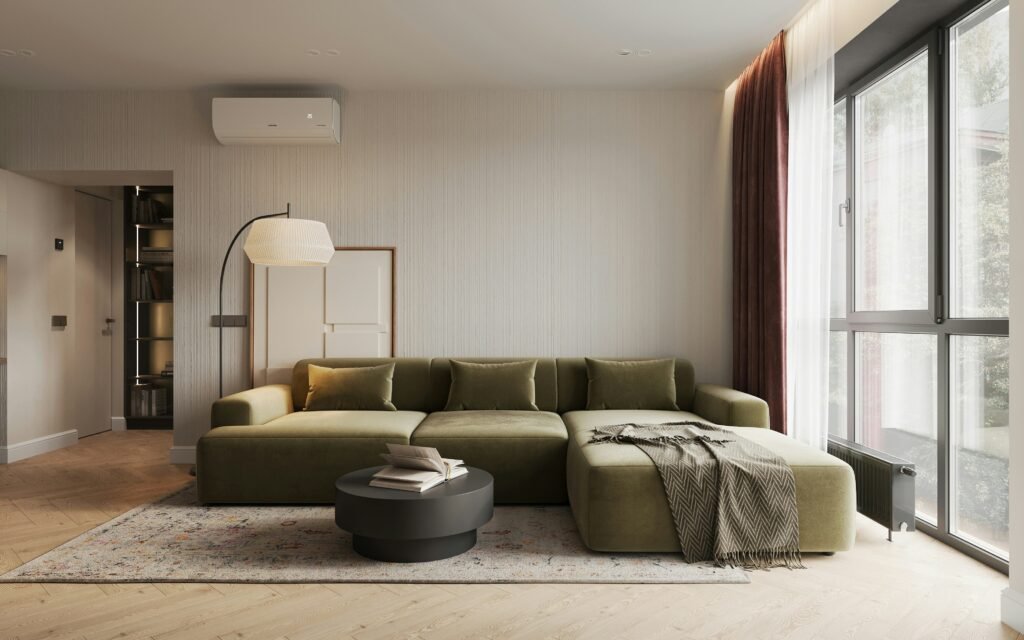
A sectional isn’t off-limits in a small room, you just need the right scale.
Apartment-sized sectionals tuck into a corner and actually save space by using it efficiently.
Look for armless or low-arm styles that don’t add bulk.
Burrow and Article both make modular apartment sectionals starting around $1,500 that ship to small spaces easily.
13. Add Floating Shelves Instead of a Bookcase

Floating shelves give you storage and display space without the visual weight of a full bookcase sitting on the floor.
They keep the floor clear, which is the whole game in a small room. Space them evenly and don’t overfill them.
A little breathing room between objects keeps the wall from feeling busy.
14. Use Wall Sconces to Save Table Space
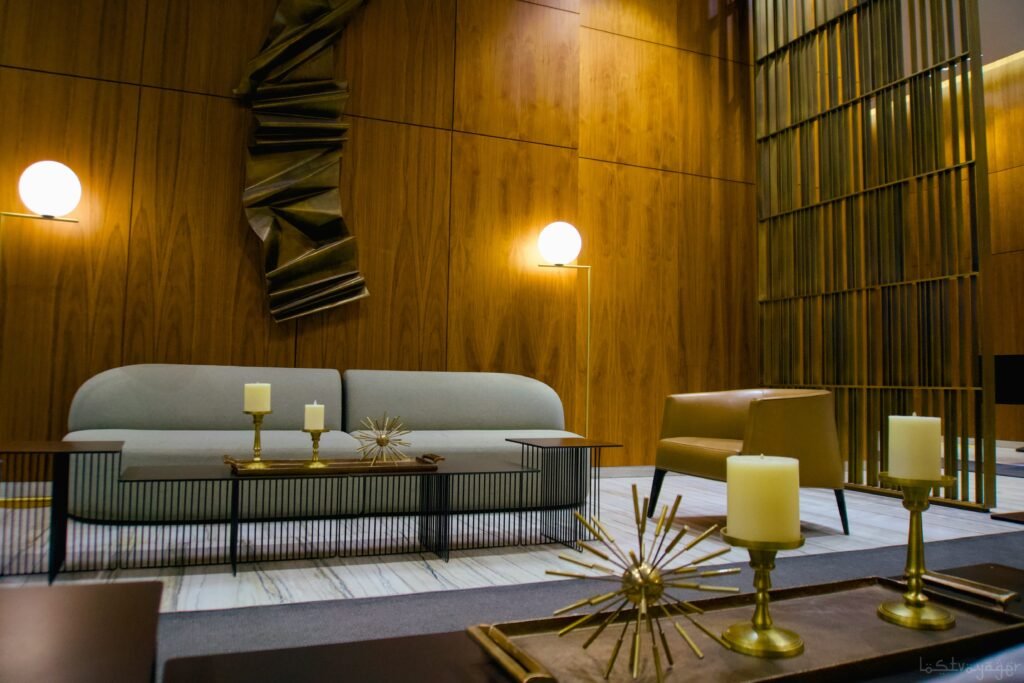
Table and floor lamps eat up surface and floor space you don’t have.
Wall sconces deliver the same warm light while floating on the wall instead.
Plug-in sconces mean no rewiring, so they’re totally renter-safe.
They also add a designed, layered look that makes a small room feel more finished.
15. Layer Your Lighting Instead of One Overhead
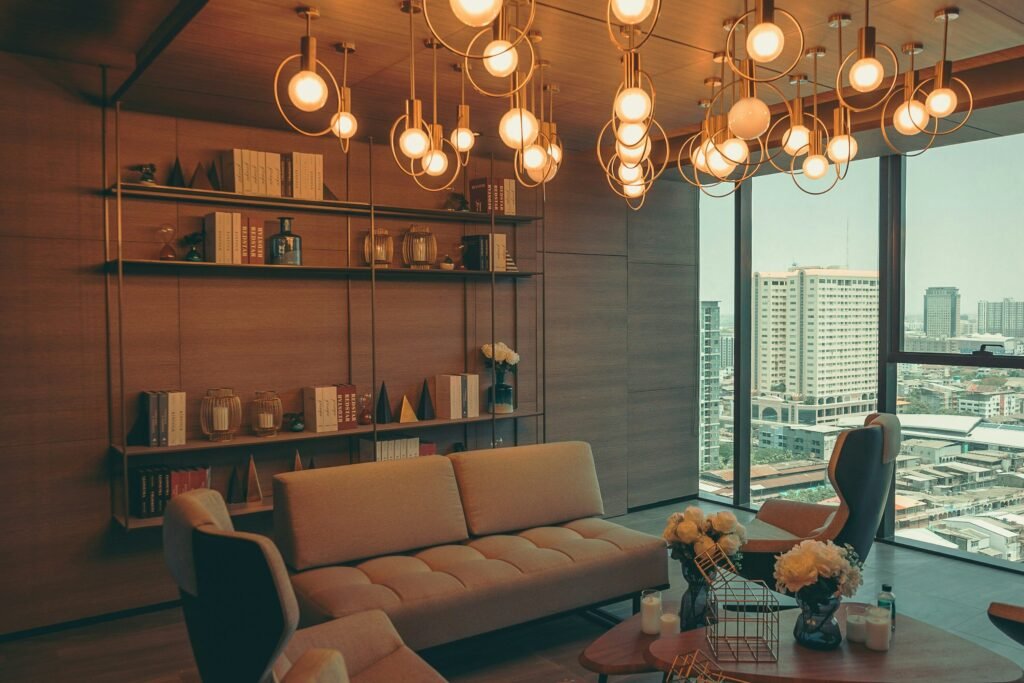
One ceiling light flattens a room and pushes it to feel like a box.
Instead, layer a few smaller light sources at different heights, a table lamp, a floor lamp, maybe a small accent light.
The pools of warm light create depth and coziness.
Swap in soft white bulbs around 2700K for that inviting glow.
16. Paint the Ceiling to Draw the Eye Up
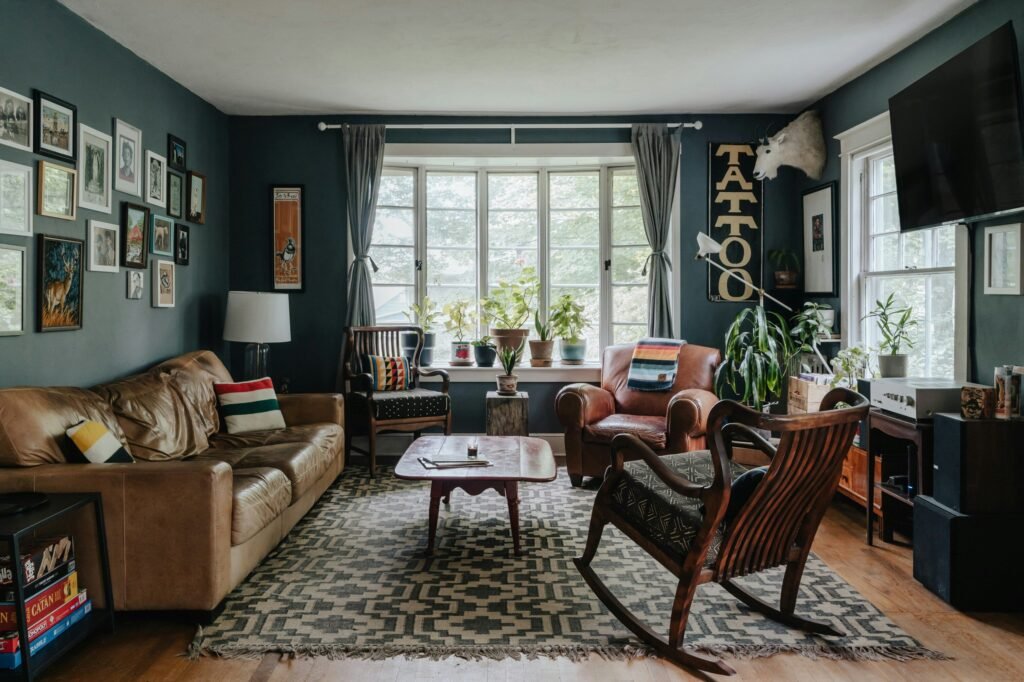
Most people forget the ceiling exists, but a soft wash of color up there draws the eye upward and makes the room feel taller.
Keep it pale, think barely-there blue, blush, or cream.
It adds character without shrinking the space the way a dark ceiling would.
This is one of those small living room ideas modern designers quietly rely on.
17. Zone a Studio With Furniture Placement
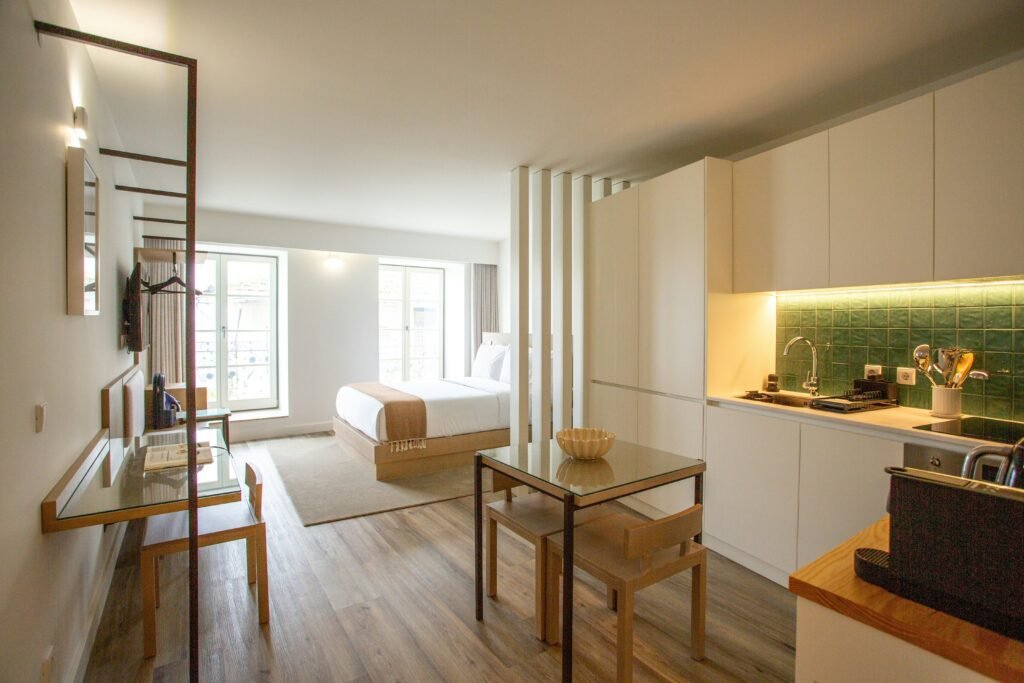
If your living room shares space with your bed or kitchen, use furniture to create invisible walls.
A sofa with its back to the bed marks where the living zone starts. A rug under the seating draws the boundary.
This gives a studio the feel of separate rooms without building a single thing.
18. Go for a Low-Profile Sofa
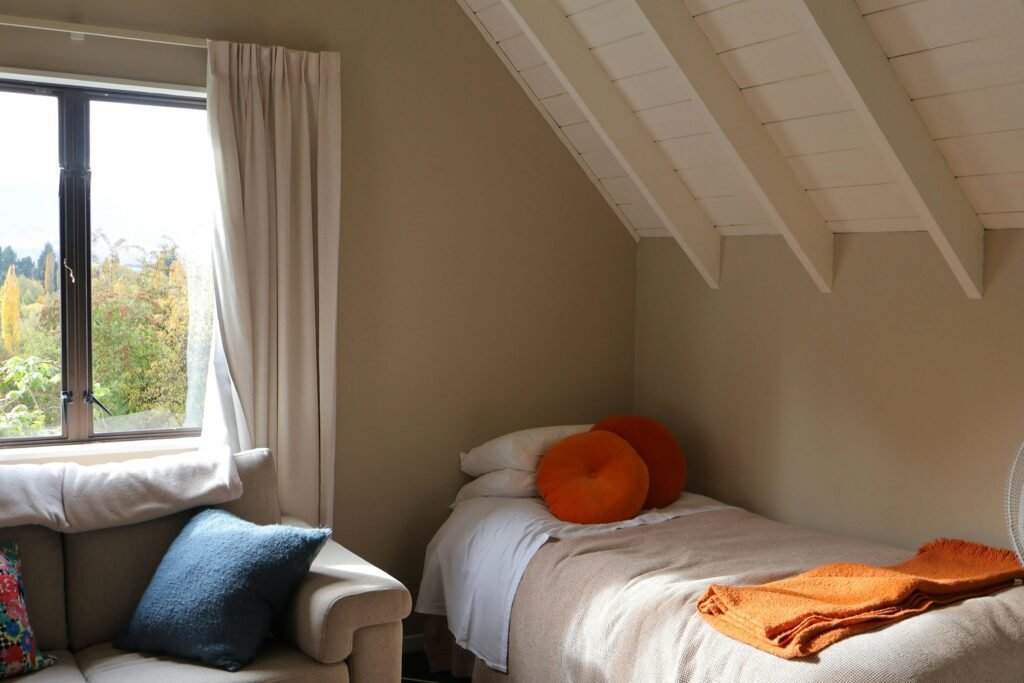
A sofa with a low back leaves more open wall above it, which makes the ceiling feel higher and the room more spacious.
It’s a favorite in small living room ideas minimalist setups for exactly that reason. The extra wall space also gives you room for art or a shelf.
Just make sure it’s still comfy enough to sink into.
19. Stick to a Tight Color Palette
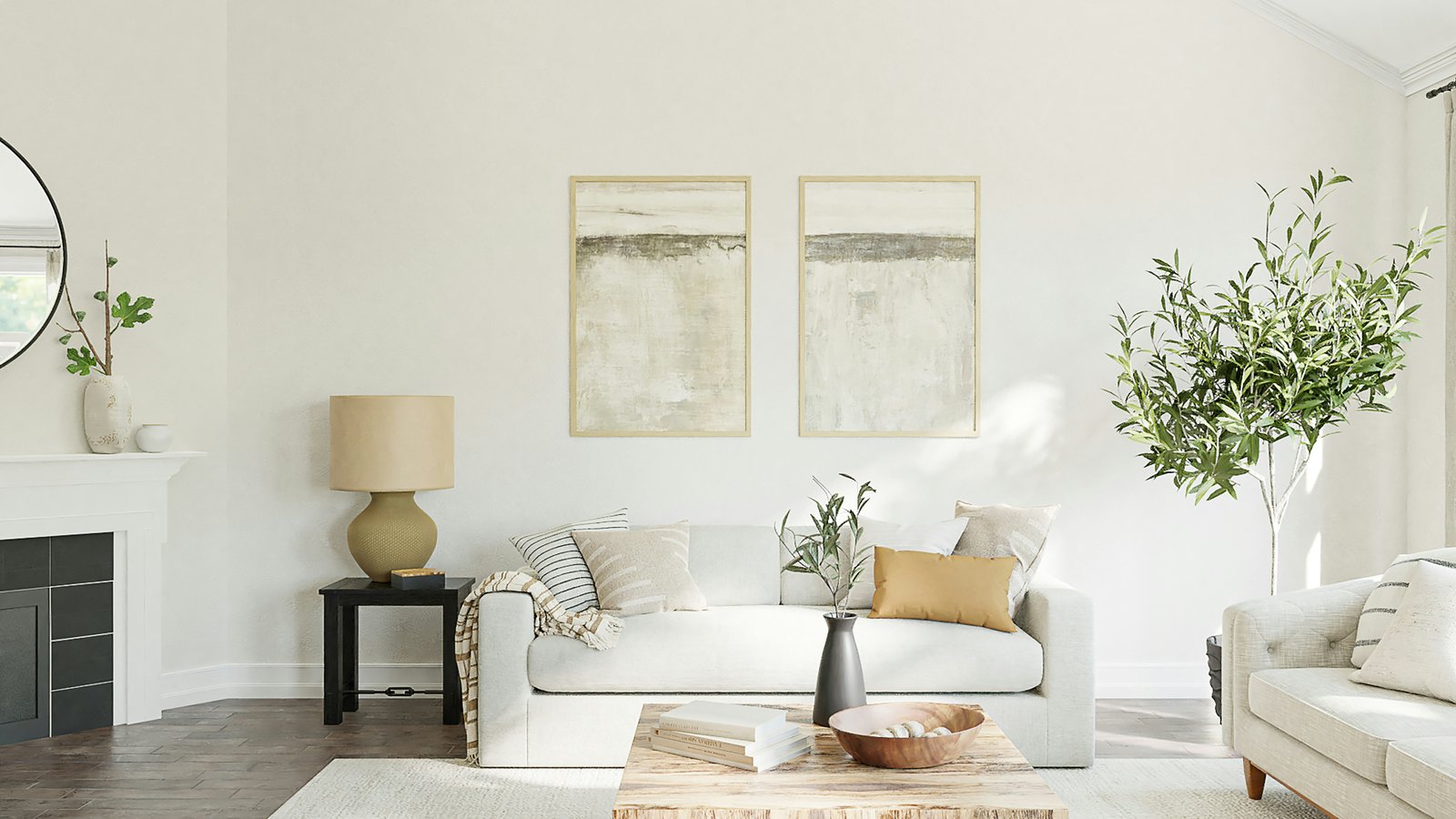
Too many colors chop a small room into busy little sections.
Pick two or three tones and let them repeat around the room.
This visual consistency lets the eye glide without stopping, which makes the space feel larger and calmer.
Neutrals are easiest, but a soft monochrome scheme in one favorite color works beautifully too.
20. Hang Art High and Vertical
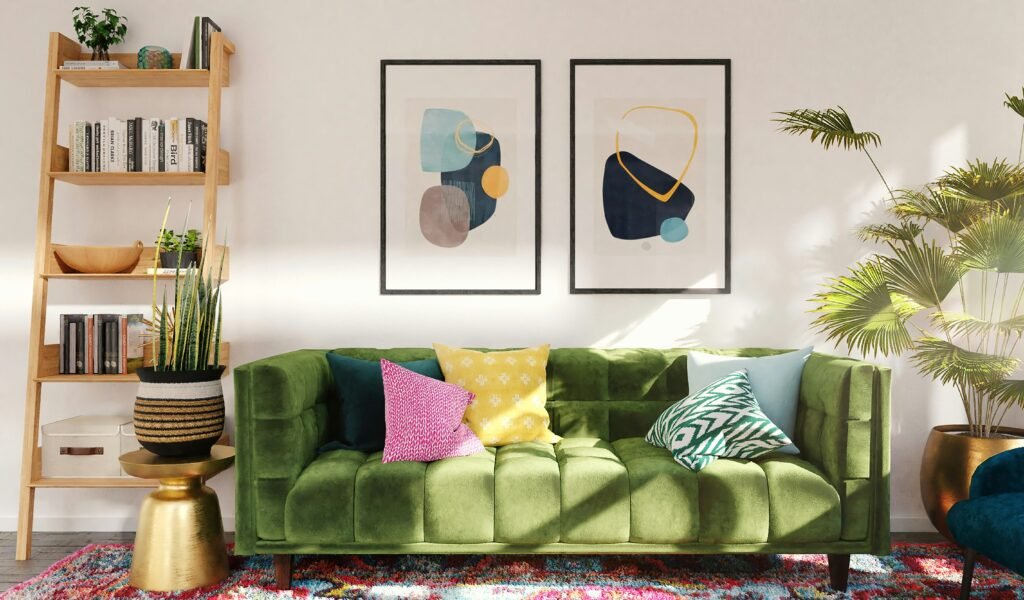
Drawing the eye upward is the secret to faking height.
A tall piece of art, or a vertical stack of smaller frames, pulls attention up the wall and makes ceilings feel taller.
Skip hanging everything at eye level, that keeps the eye low and the room short.
Let at least one arrangement reach toward the ceiling.
21. Bring In Plants for Height and Life

A tall plant in a corner adds height and softens hard edges without taking much floor space.
Greenery also makes a room feel fresh and alive, which reads as bigger and more inviting. A fiddle leaf fig or a snake plant both handle apartment light well.
Trailing plants on a shelf add movement up high where you want the eye to travel.
22. Use Nesting Tables Instead of One Big One

Nesting tables give you surface space when you need it and tuck away when you don’t.
That flexibility is gold in a small room where you can’t leave big pieces sitting out all the time.
Pull them apart for guests, slide them together the rest of the week.
They adapt to your space instead of dominating it.
23. Choose Slim-Arm or Armless Chairs
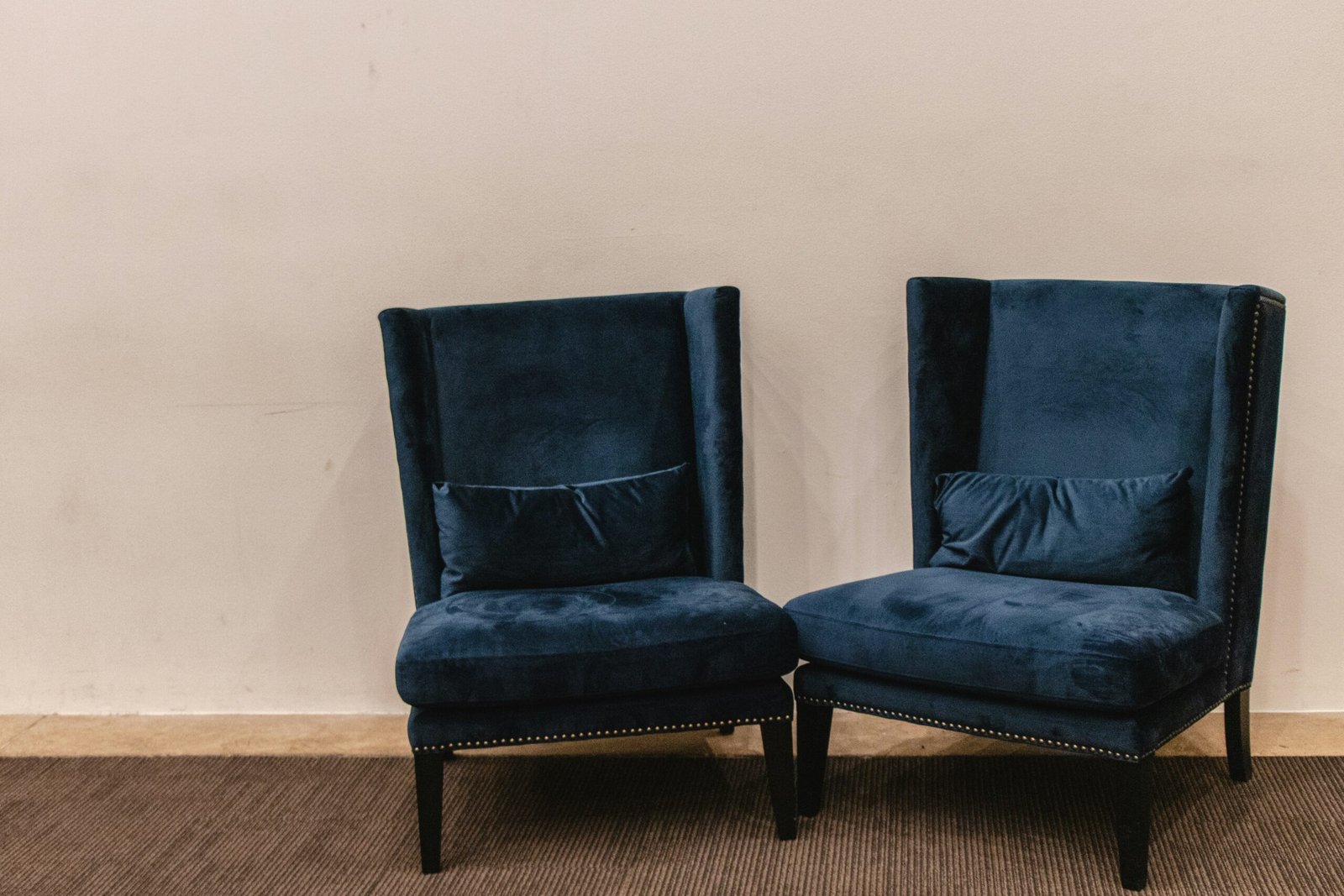
Bulky arms add width you can’t afford in a tight room. Armless or slim-arm chairs give you the same seating in a smaller footprint.
They also feel lighter and more open, especially in an already snug conversation area.
Look for accent chairs with visible legs to keep that floating, airy quality going.
24. Add Built-Ins Around the TV or a Nook
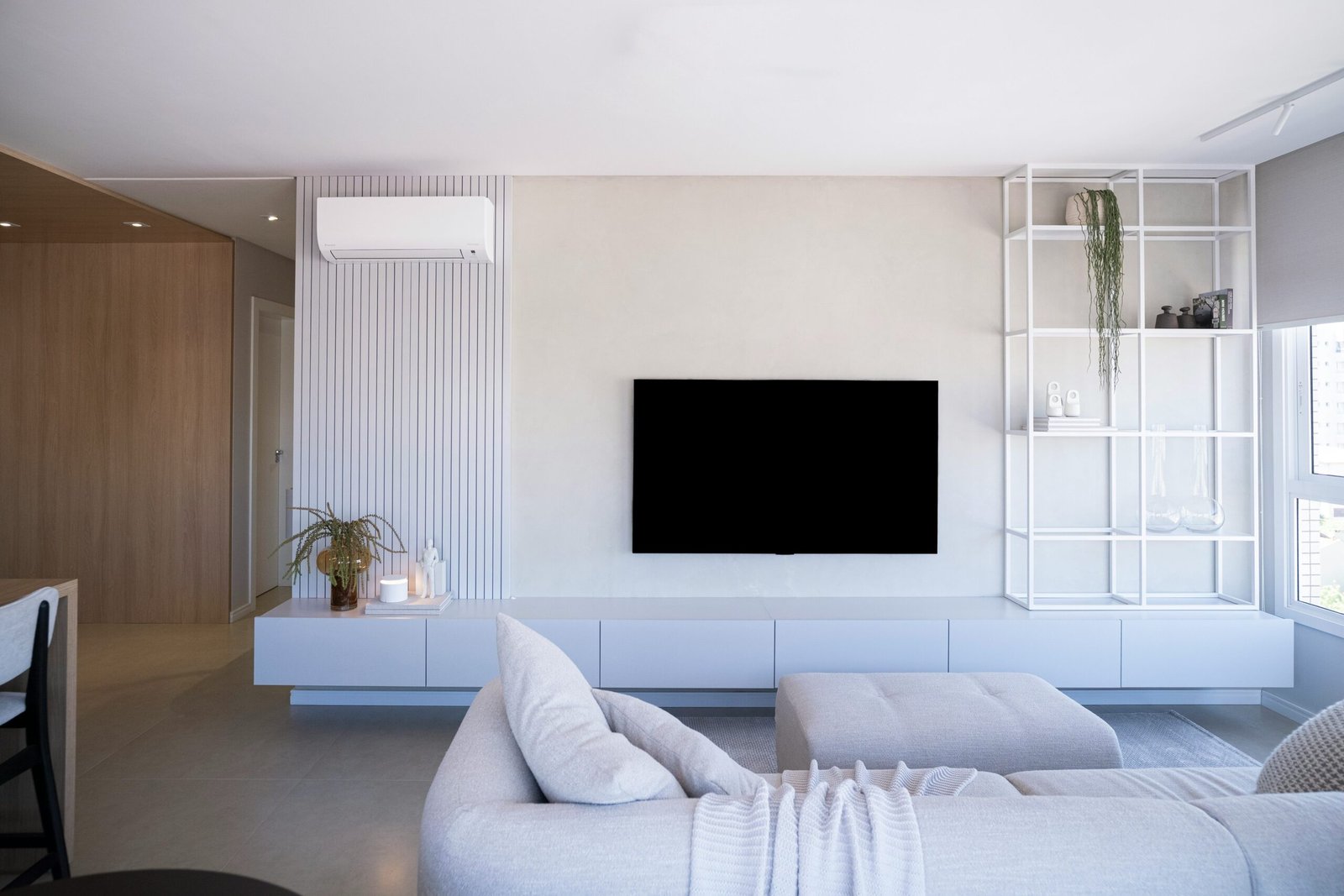
Built-ins use awkward nooks and wall space that would otherwise go to waste.
Framing your TV with shelving turns a blank wall into smart storage and display.
If you rent, freestanding shelf units pushed together mimic the built-in look without permanent changes.
Closed baskets on the lower shelves hide the clutter you’d rather not see.
25. Keep Window Treatments Simple
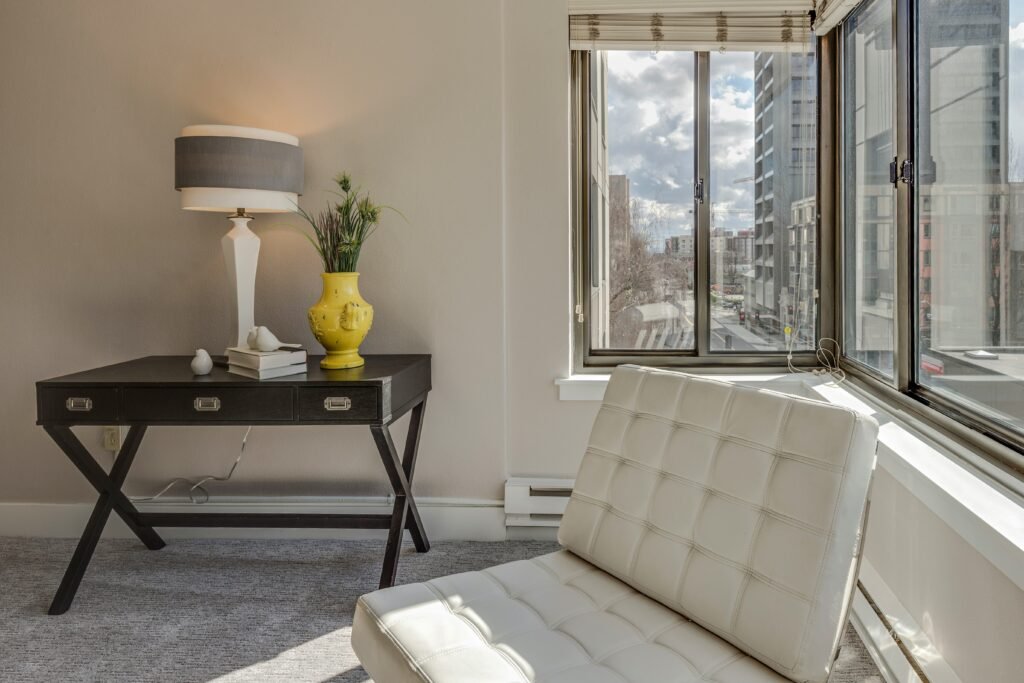
Heavy, dark drapes weigh a small room down and block the light you need.
Go with sheer panels, simple roller shades, or leave the windows nearly bare if privacy allows.
More light instantly makes a room feel bigger and more open.
This is one of the easiest small living room ideas on a budget since doing less actually costs less.
26. Pick a Round Coffee Table for Tight Spaces
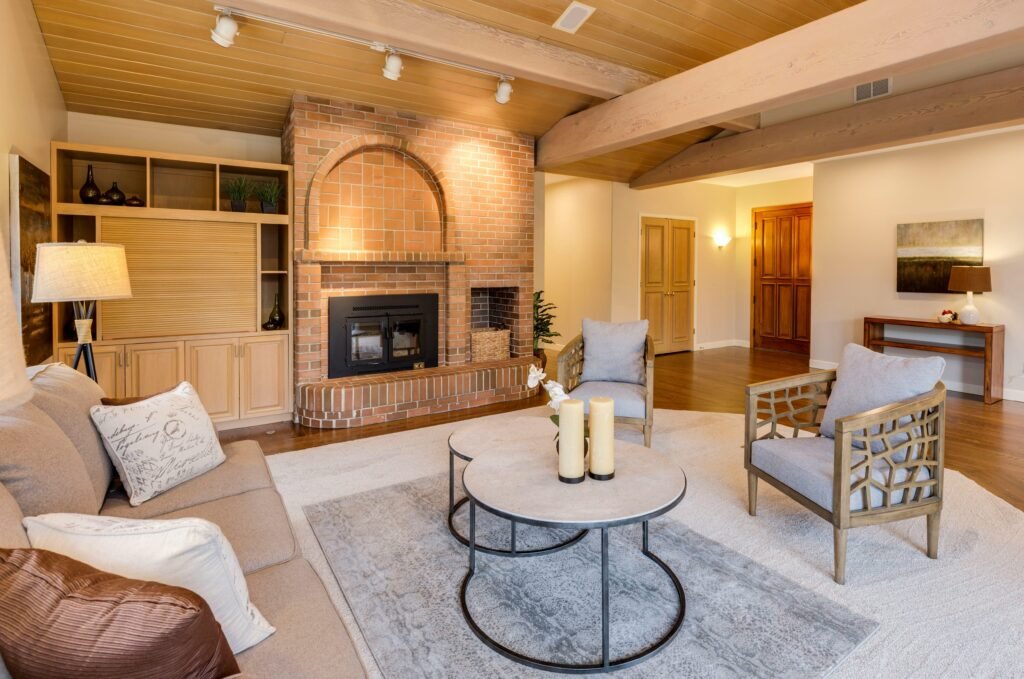
Round tables have no sharp corners to bump into or block the walking path.
That makes them perfect for narrow rooms where every inch of flow matters.
The soft shape also breaks up all the straight lines of a boxy room.
You get better traffic flow and a cozier feel in one piece.
27. Hide Cords and Clutter
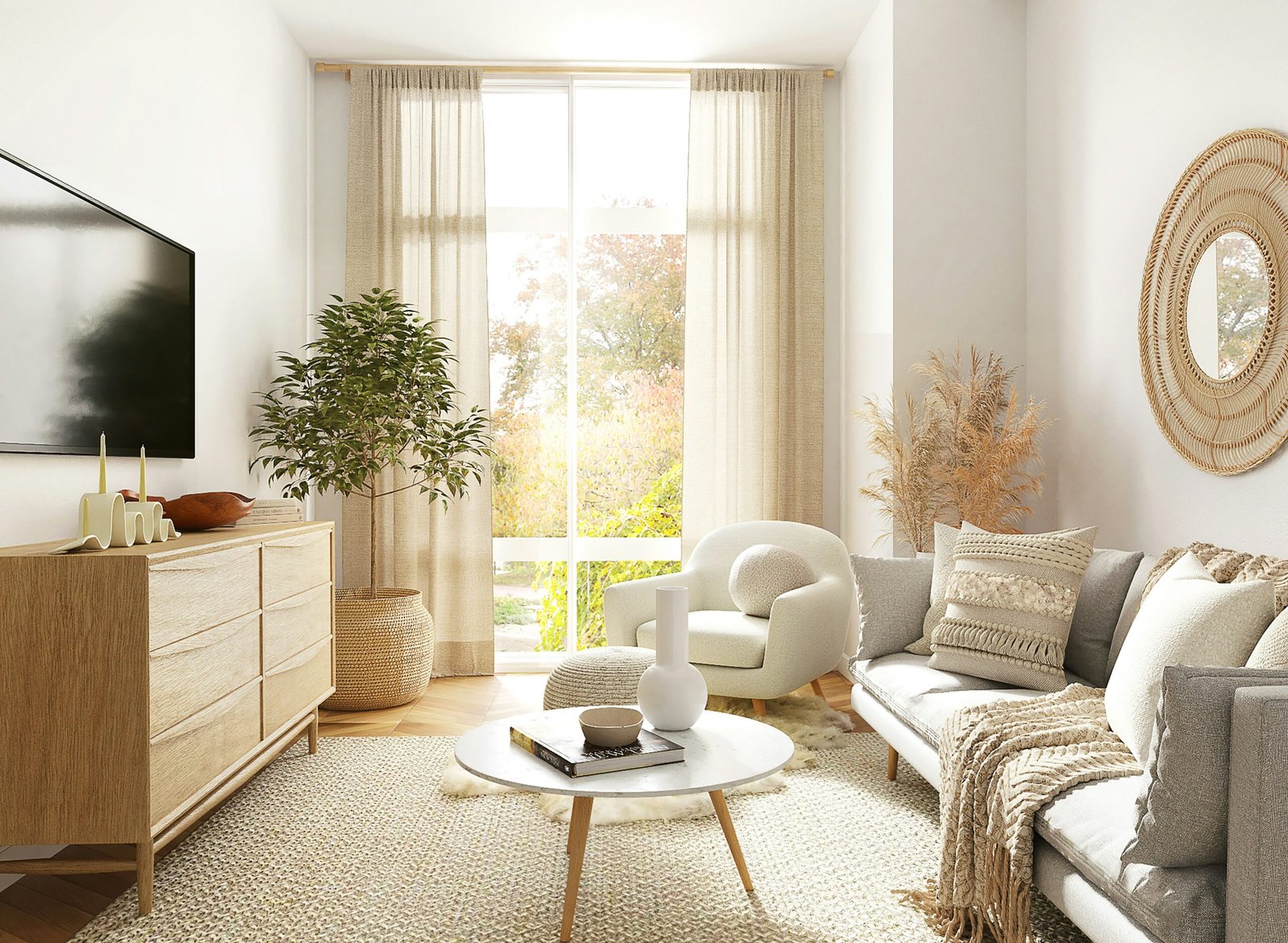
Visible cords and everyday clutter make even a nice room feel chaotic and smaller.
Run cords behind furniture with clips or a cord cover, and give small items a home in a lidded basket.
A tidy room reads as a bigger room, full stop. It’s free and it’s the fastest upgrade on this whole list.
28. Use a Daybed Instead of a Sofa
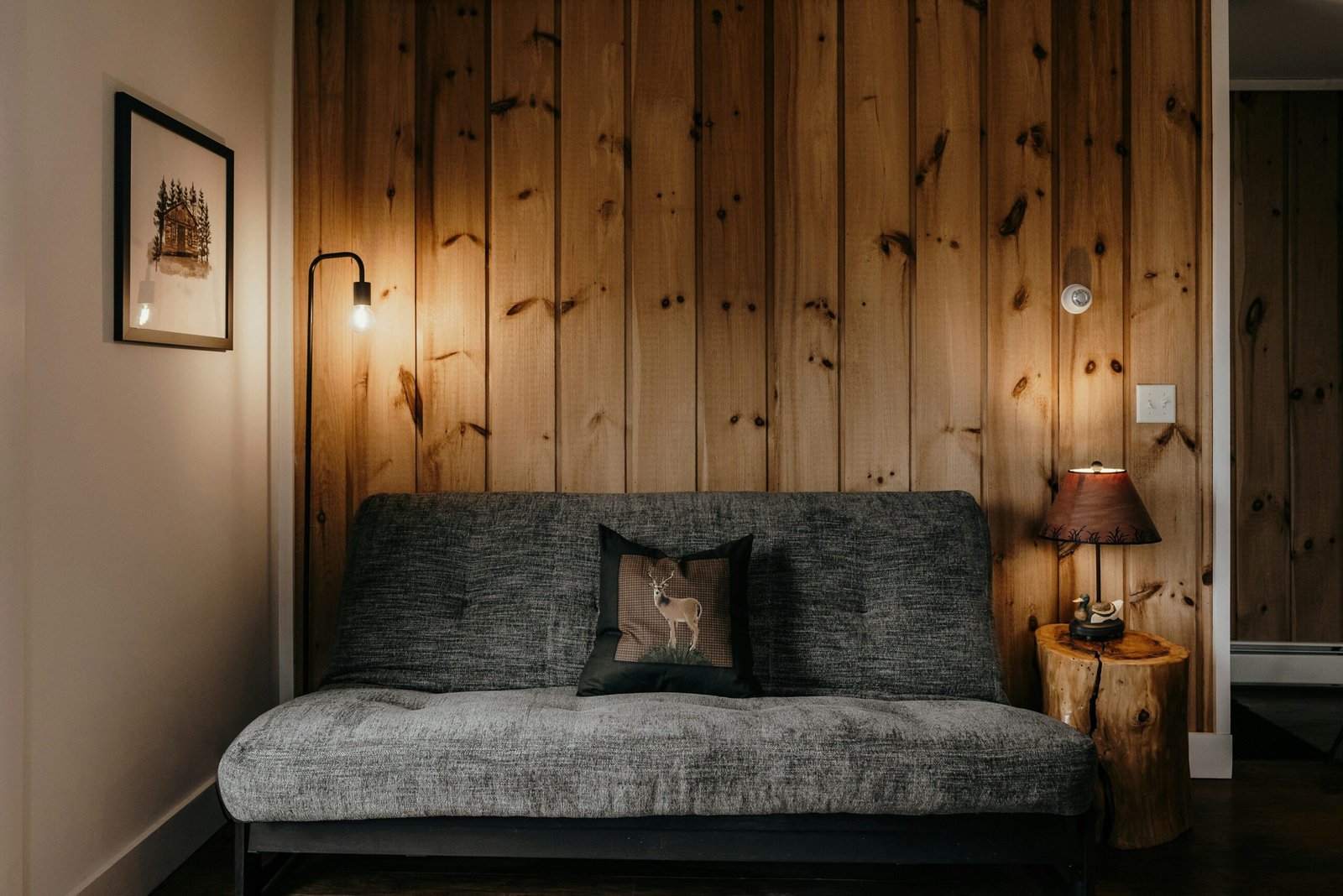
A daybed works as a sofa by day and a guest bed by night, which is a lifesaver in a small apartment.
It has a lighter, lower profile than most sofas, so it opens up the room visually too. Pile on cushions to make it cozy for lounging.
Perfect for cozy living room ideas for small spaces where guests occasionally crash.
29. Match Your Furniture to Your Walls
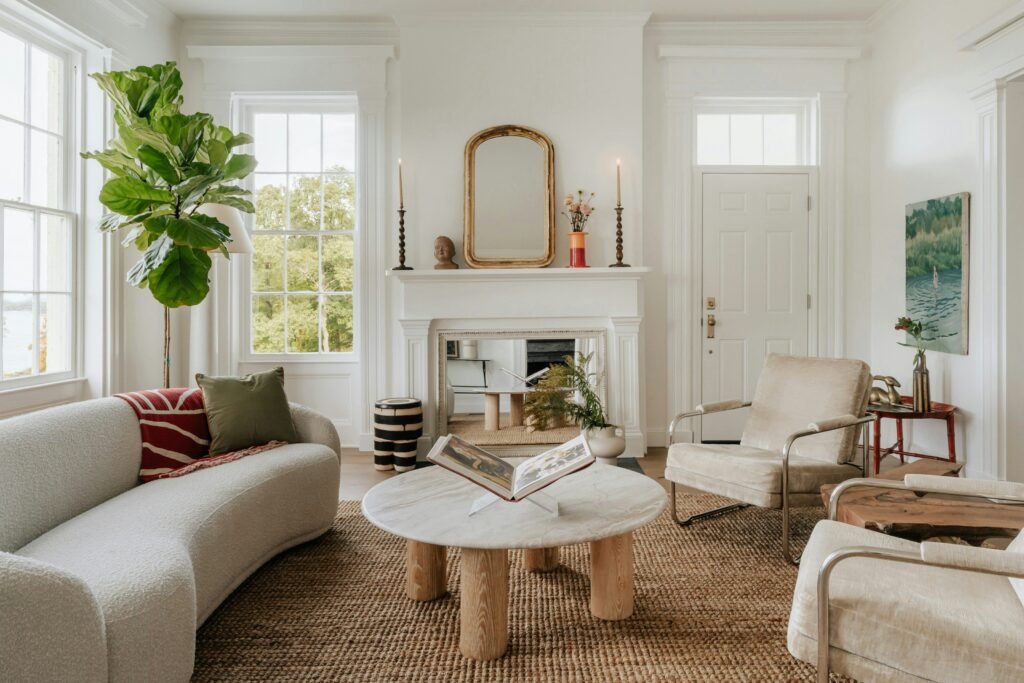
When your sofa blends into the wall color, the furniture stops interrupting the room and the space feels more continuous.
This tonal trick makes a small living room feel expansive and calm.
Add interest through texture instead of contrast, a chunky knit throw, a boucle pillow, a woven basket.
The room stays serene but never boring.
30. Add a Statement Wall for Depth
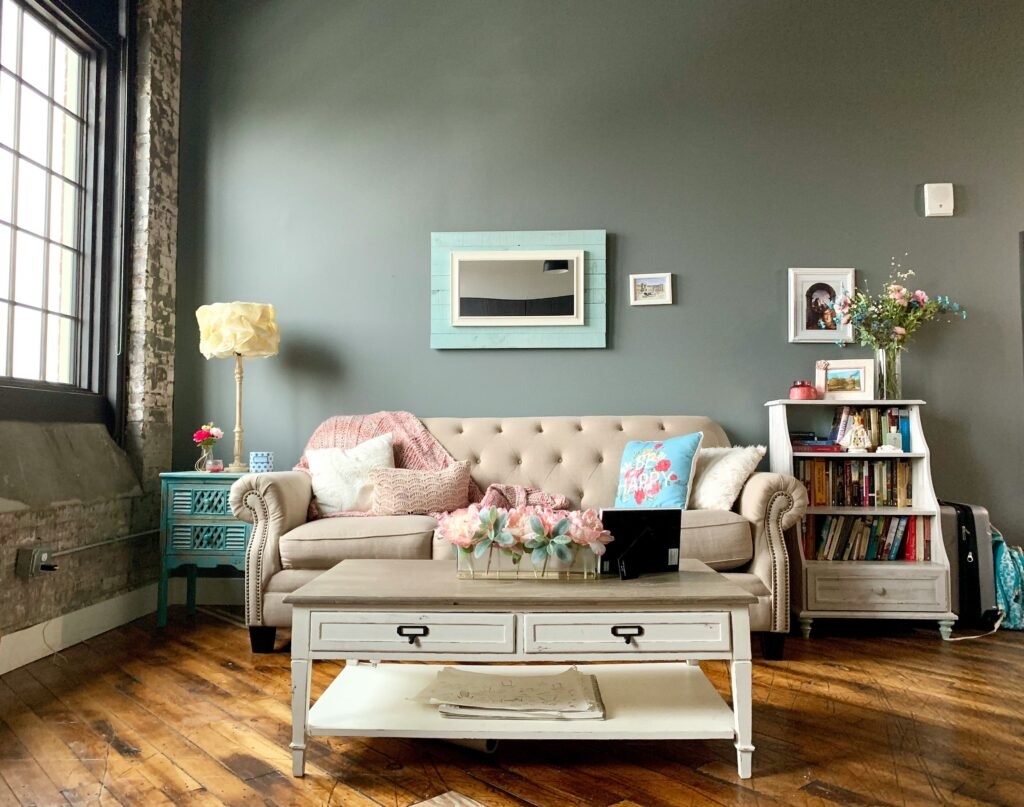
One painted or wallpapered wall adds depth and a focal point without closing the room in.
Keep the color soft and warm so it recedes rather than crowds.
A focal wall actually makes a room feel more designed and intentional, which distracts from its size.
Removable wallpaper makes this fully renter-friendly.
31. Float a Desk for a Work Nook
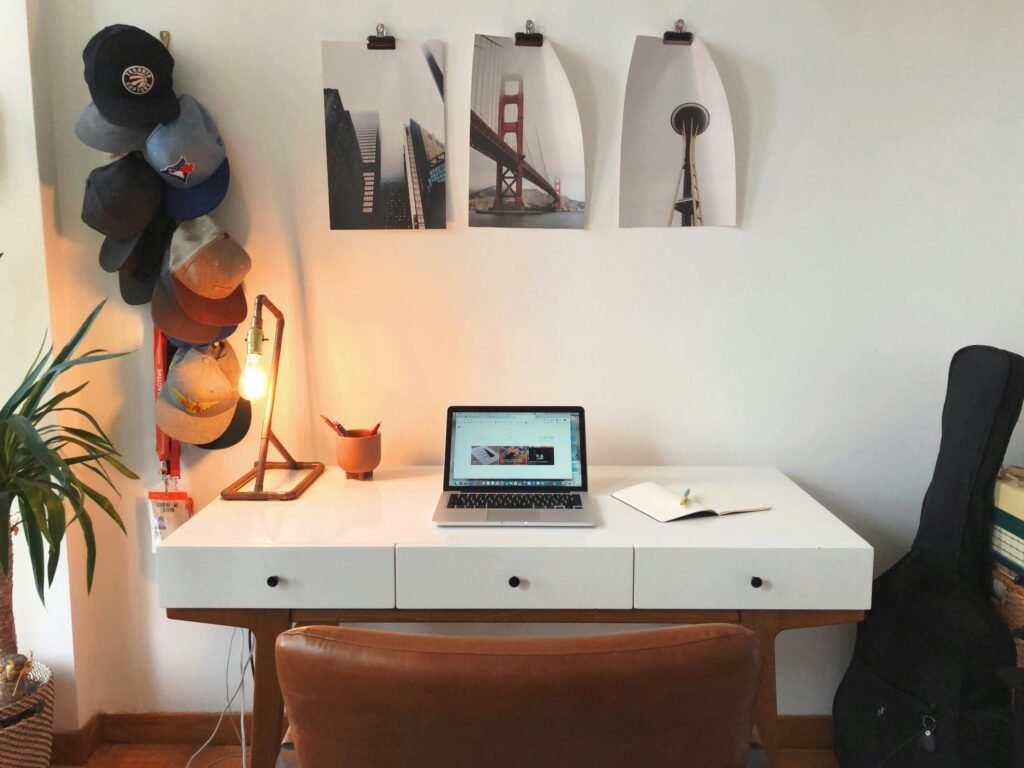
If your living room doubles as your office, a wall-mounted floating desk gives you a workspace without a bulky desk on the floor.
It tucks into a corner or a slim wall and keeps the floor open. Fold-down wall desks disappear entirely when you’re done working.
IKEA’s slim wall desks start around $50 and fit the tightest corners.
32. Use Reflective and Metallic Accents
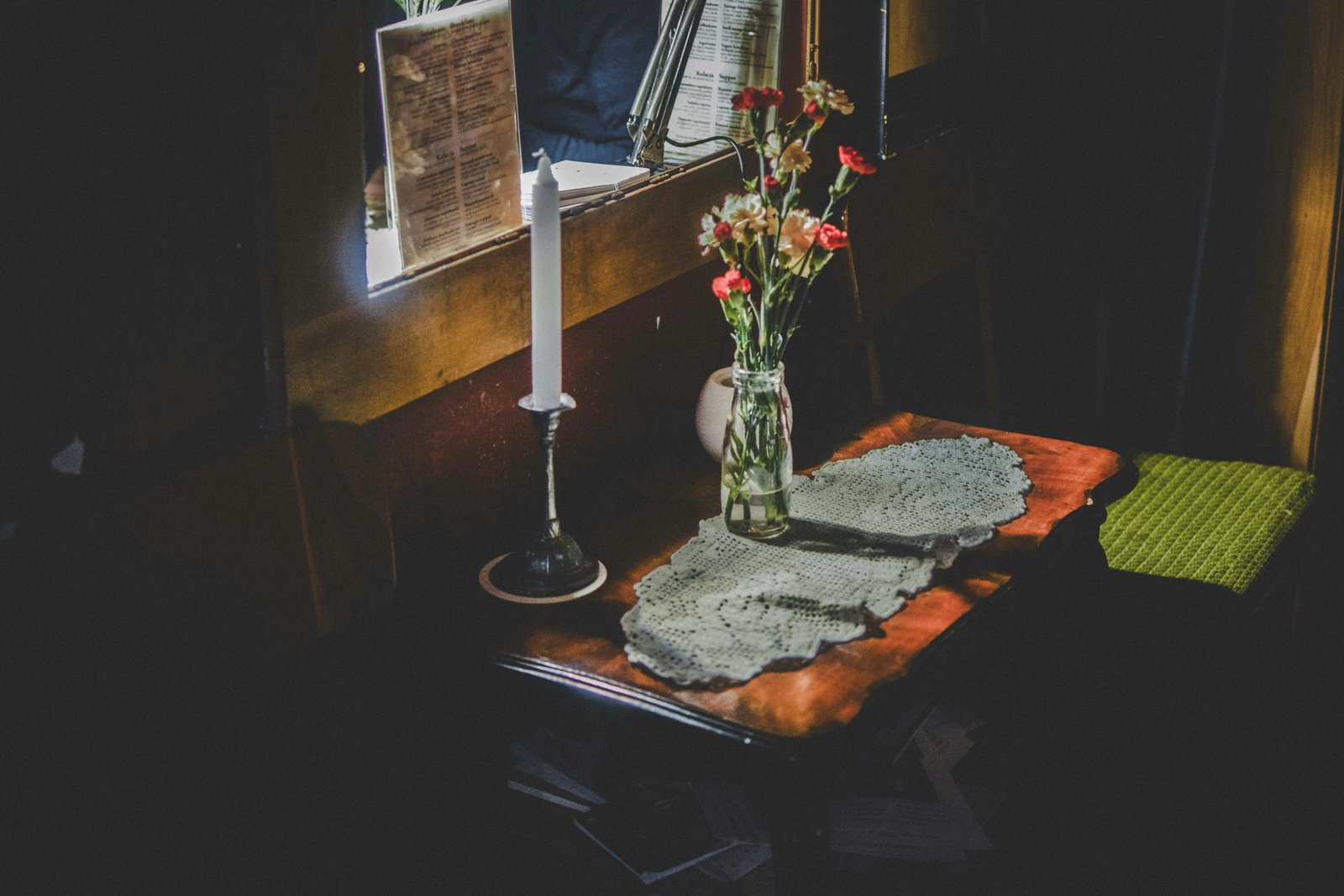
Small touches of brass, chrome, or glass catch and bounce light around the room, adding brightness and a sense of air.
A mirrored tray on the coffee table or a metallic lamp base does the trick. Keep it subtle so it reads as elegant, not flashy.
These little reflective moments make a room feel lighter without any renovation.
33. Try a Wall-Mounted or Slim Console
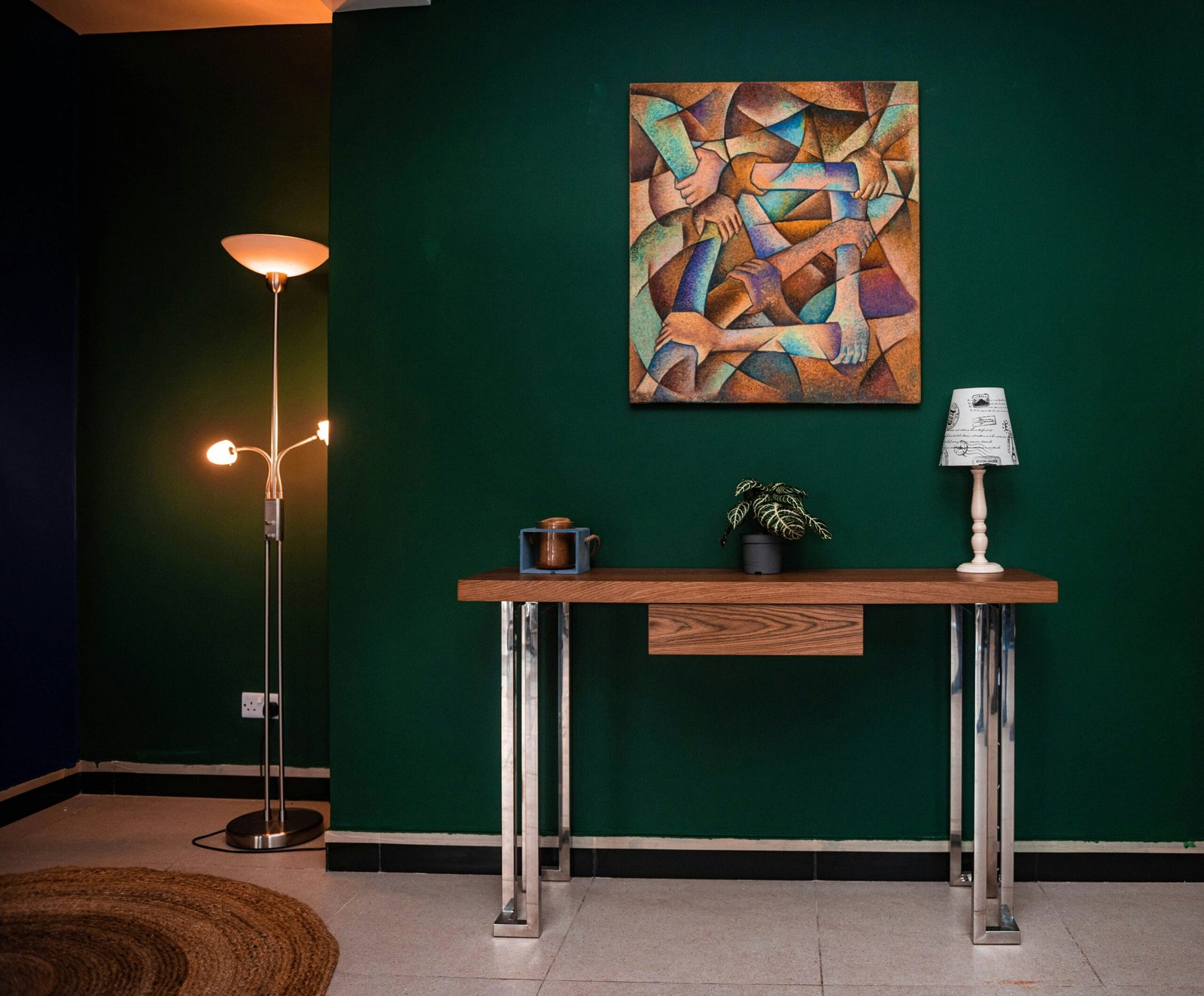
A deep console table crowds a narrow room, but a slim or wall-mounted one gives you surface space while keeping the floor clear.
Mount it and the open space underneath makes the room feel bigger.
Use it for a lamp, a bowl for keys, and one piece of art above. Function without the bulk.
34. Keep the Floor as Clear as Possible
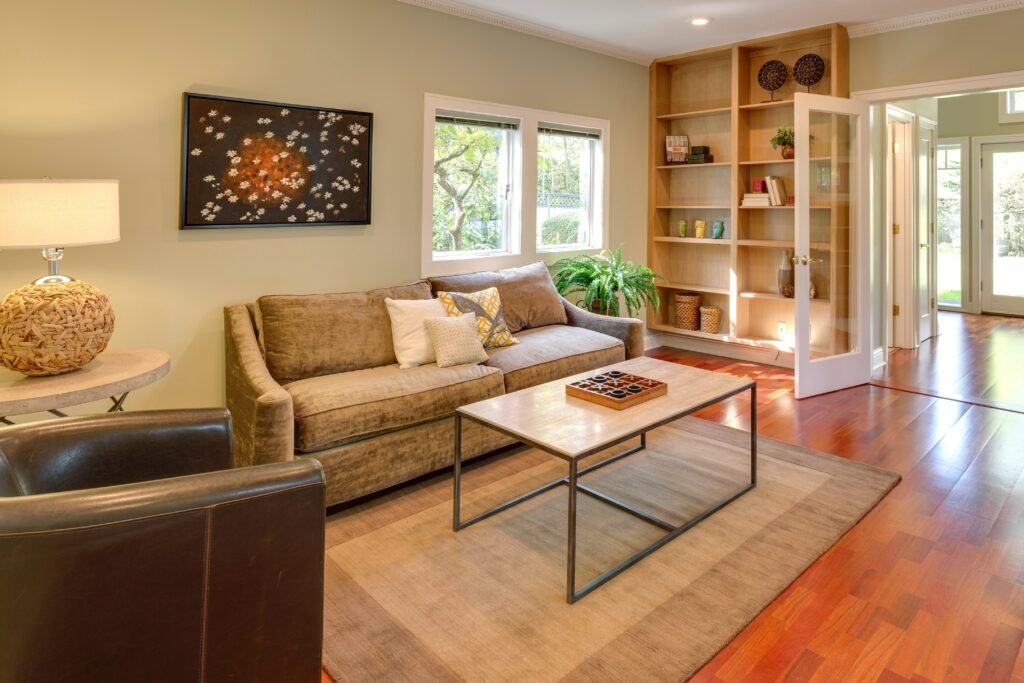
The more floor you can see, the bigger the room feels.
Resist the urge to fill every corner with furniture. Leave clear walking paths and let some floor breathe around your pieces.
That negative space is what separates a cramped room from a cozy, open one. When in doubt, take one thing out.
35. Choose a Leggy Accent Chair Over a Bulky One
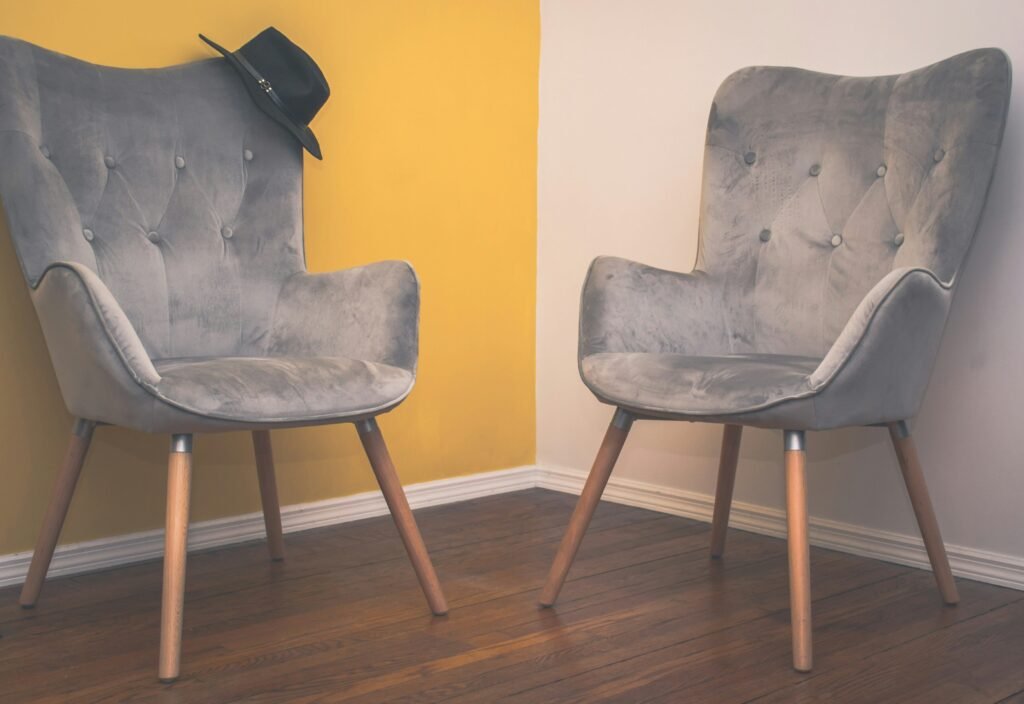
An accent chair with slim, visible legs keeps your sightline to the floor open, unlike a heavy upholstered club chair that plants itself like a boulder.
The leggy option feels light and easy to move. It fills the seating need without adding visual bulk.
A cane or rattan chair adds texture and stays airy too.
36. Add Warmth With Textiles, Not Bulk

Cozy doesn’t have to mean crowded.
Build warmth through soft textiles instead of extra furniture, a chunky throw, a couple of textured pillows, a soft rug underfoot.
These add that hug-you feeling without taking up any real space. It’s how you get cozy small living room ideas without cramming the room full of stuff.
37. Use a Corner You’re Ignoring
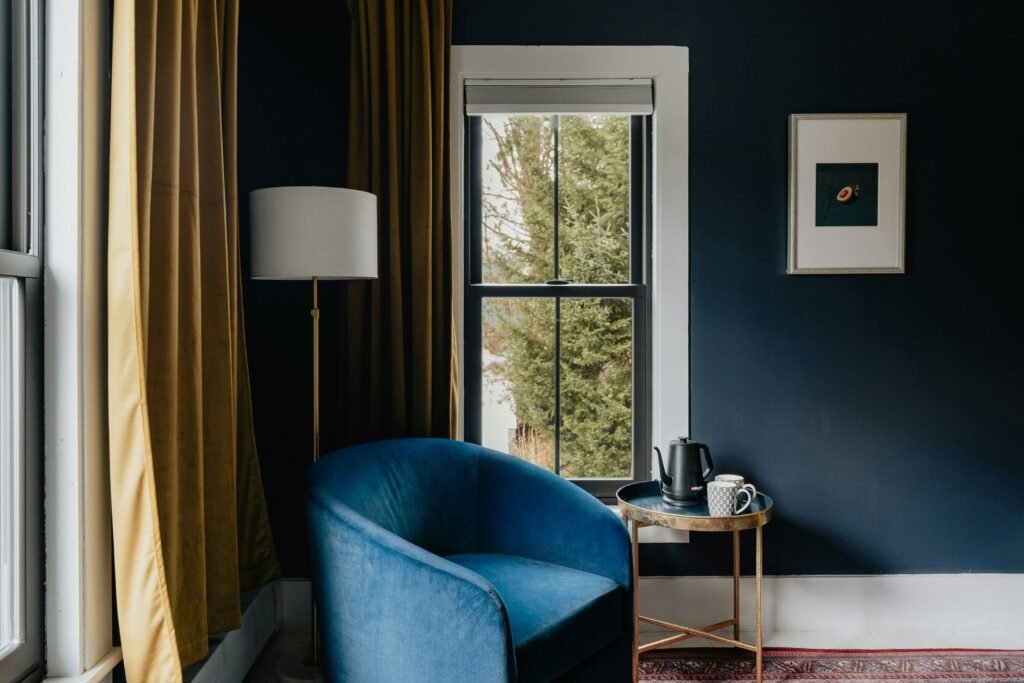
That empty corner is prime real estate.
Turn it into a little reading nook with a slim chair and a floor lamp, or stack it with a tall plant and a small shelf.
Using your corners makes the whole room feel fuller and more purposeful. It also keeps the center floor open where you actually walk.
38. Pick a Sofa With Storage Underneath
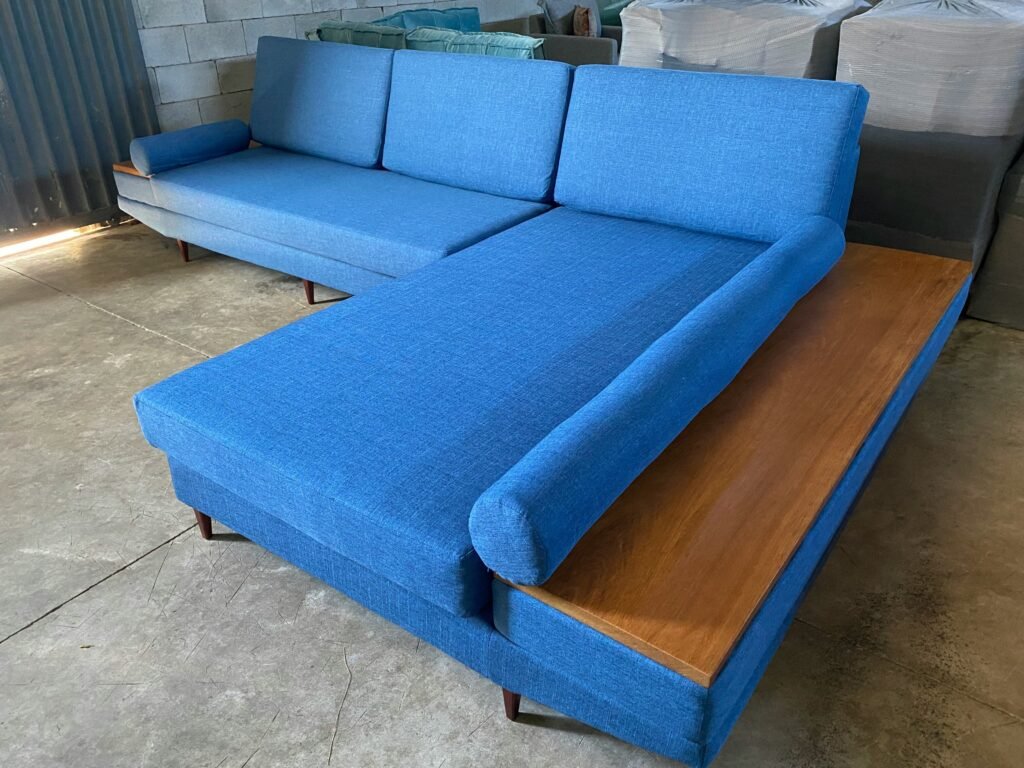
Some apartment sofas come with built-in storage under the seats, perfect for hiding blankets, board games, or off-season stuff.
It keeps clutter out of sight without adding a single extra piece of furniture.
Burrow and a few IKEA models offer this feature. In a small space, storage you don’t have to see is the best kind.
39. Repeat the Same Material Throughout
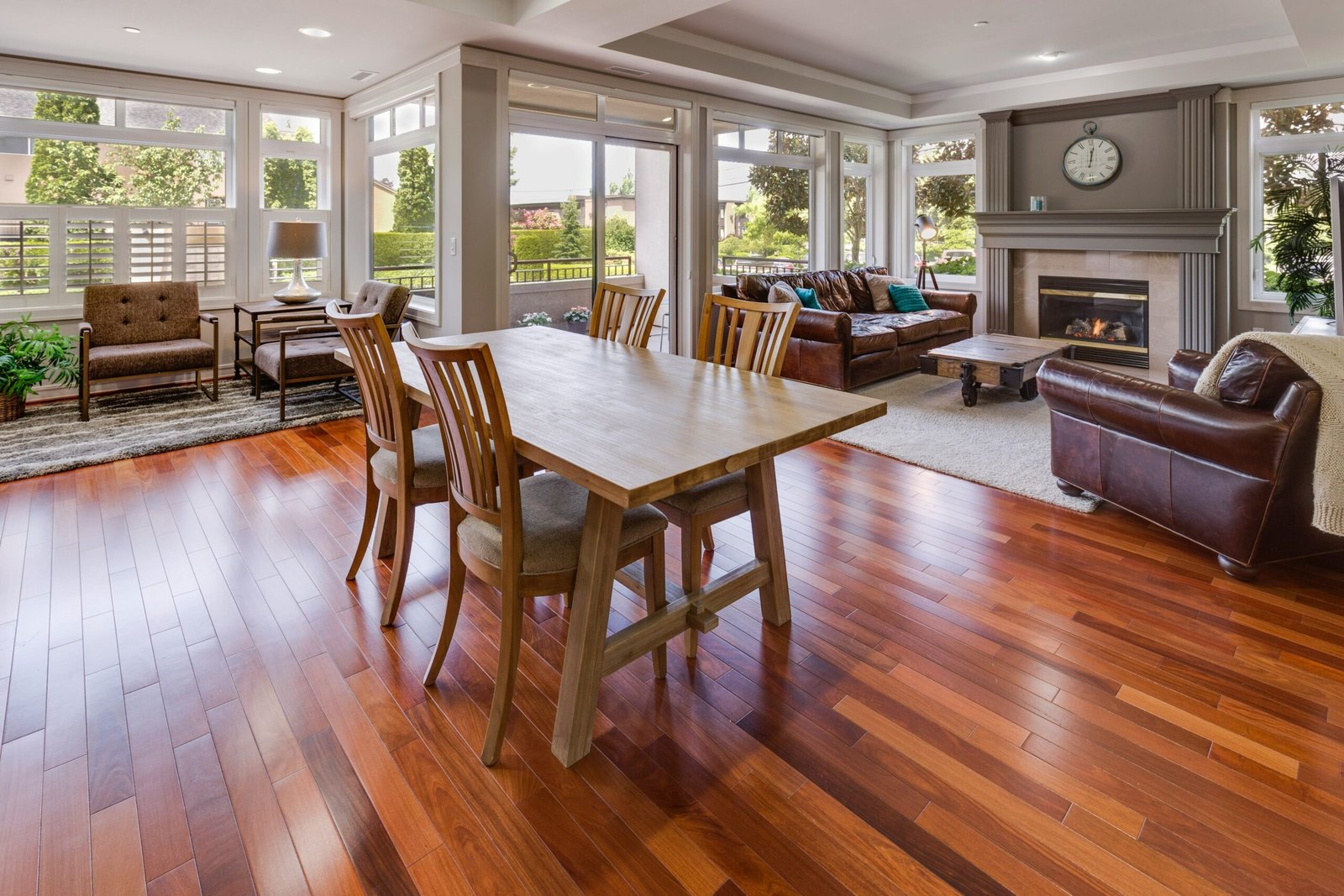
When your wood tones and finishes match around the room, everything feels connected and intentional.
That cohesion tricks the eye into reading the space as one calm whole instead of a jumble of pieces.
Pick one wood tone and one metal finish and stick to them. It’s an easy way to make a small room look pulled-together and polished.
40. Edit, Then Edit Again
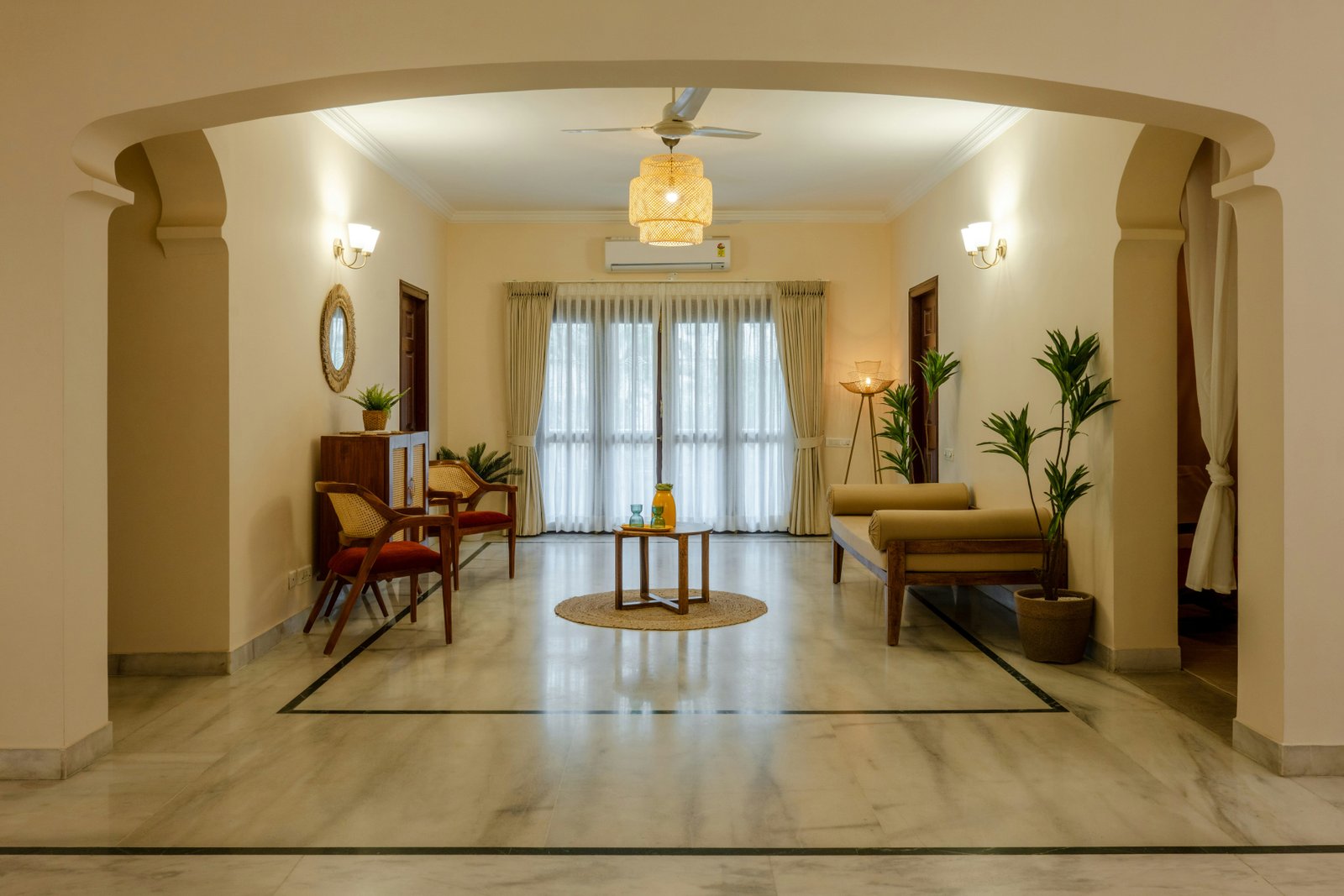
The best thing you can do for a small living room is own less.
Before you buy anything new, take stock of what’s actually crowding the room and remove what you don’t love or use.
A curated, edited space always feels bigger than a full one. Start here, and half the ideas on this list become optional.
Quick Tips to Make Any Small Living Room Feel Bigger
Stick to pale, warm colors on the largest surfaces to bounce light and push the walls outward.
Choose furniture with legs so you can see the floor underneath, which fakes extra square footage.
Keep at least one clear walking path through the room so it never feels blocked or cramped.
Declutter first, decorate second. An edited room always looks bigger than a full one, no matter how nice the stuff is.
Frequently Asked Questions
What colors make a small living room look bigger?
Light, warm neutrals like soft white, greige, and pale putty bounce the most light and make walls feel farther apart. Keep the largest surfaces pale and add color through small accents instead.
How do I fit a sofa in a small living room?
Choose an apartment-sized sofa or a low-arm loveseat, and pick one with exposed legs so the floor shows underneath. Float it a few inches off the wall to make the room feel more open.
Can I have a sectional in a small living room?
Yes, if you size it right. Apartment sectionals and armless modular styles fit corners efficiently and can actually save space compared to a sofa plus separate chairs.
How do I make a small living room cozy but not cramped?
Add warmth through soft textiles like throws, pillows, and a plush rug rather than extra furniture. Layer a few warm light sources instead of one harsh overhead light.
What’s the biggest mistake in a small living room?
Using a rug that’s too small. It chops the floor into pieces and shrinks the room. Go bigger so at least the front furniture legs sit on it.
Wrapping Up
Small living rooms don’t have to feel small.
Whether you float your furniture, hang your curtains high, or just clear the clutter off your coffee table, even one or two of these changes can make your room feel twice the size.
Pick the idea that made you go “oh, I could do that this weekend” and start there.
Then save this post to your Pinterest board so you have it handy when you’re ready for the next one.